
Noise Monitoring in
Washington
Class 1 sound data for Washington's state and local noise rules.
Washington builds across a dramatic range — a decades-long light-rail expansion around Puget Sound, a data-center corridor powered by cheap hydropower in the center of the state, and aerospace, ferries, and ports on the coast. Unlike most states, Washington sets noise limits statewide, and its cities and counties adopt and add to them — so the rule that applies is a mix of state and local codes.
Specto equips Washington contractors and consultants with Class 1 monitoring stations that record around the clock, measure levels against the background, send alerts when a threshold is exceeded, and report automatically. Instead of assembling a system on site, your team installs a configured station and starts documenting conditions from day one — answering questions with data instead of recollection.
Regulatory
The Rules That Apply to Washington Projects
Washington is one of the few states that regulates environmental noise statewide. The Department of Ecology sets maximum permissible noise levels (WAC 173-60), and cities and counties adopt and add to them, so the governing standard is a mix of state and local rules:
- Statewide EDNA limits (WAC 173-60) — Washington assigns every property an Environmental Designation for Noise Abatement (EDNA): Class A (residential), B (commercial), or C (industrial). Maximum permissible levels at a receiving property depend on the source and receiving zones — for example, 55 dBA into a residential area — and drop by 10 dBA at night for residential receivers.
- Construction and the night limit — temporary construction noise is largely exempt from the daytime limits, but noise received in residential (Class A) areas between 10:00 p.m. and 7:00 a.m. is not exempt, so nighttime work near homes must meet the reduced limit or obtain a variance
- Local ordinances — Seattle (SMC 25.08), King County (Ch. 12.86), Bellevue, Tacoma, and Spokane adopt the EDNA framework and add construction hours — commonly starting at 7:00 a.m. on weekdays — along with decibel limits and a variance process for after-hours work
- Measured at the receiving property — because Washington's limits are stated in dBA at the receiving property and reference an ANSI-specification sound level meter, an accurate Class 1 instrument is central to a defensible reading; the SV 307A meets IEC 61672-1 Class 1, the international counterpart to ANSI Type 1, with final acceptance left to the authority having jurisdiction
- Federal rules — federal OSHA worker noise-exposure requirements (29 CFR 1926.52) and FHWA 23 CFR 772 apply, alongside WSDOT requirements and project-specific permit and variance conditions
Why Washington Teams Choose Specto
01
Ready to Deploy: US Inventory
Specto stocks Class 1 noise monitoring systems in the US for rent or purchase. Teams in Seattle, Bellevue, Tacoma, Spokane, Vancouver, and Everett can have monitoring on site in days — before a concern turns into a delay.
02
Field-Ready: Configured Before Shipment
Each station arrives with alert thresholds, reporting schedules, and SvanNET remote access already set. Your crew installs and starts recording, instead of assembling a system on site.
03
Applied Expertise: EDNA Zones & Local Codes
A Washington threshold is a mix of the state’s EDNA limits and the local ordinance, and it shifts with the source and receiving zones and the time of day. Specto configures each station to the standard governing your site — capturing the background level and the limit at the receiving property — with automated reports built for agency and community review.
Who Uses Specto in Washington
We don’t replace consultants — we equip them. Common users include:
Environmental consultants
Acoustical and noise-vibration consultants
Construction managers and general contractors
WSDOT and transit agency project teams
Data center, tech-campus, and port project teams
The Washington Construction Landscape
Puget Sound is in the middle of a decades-long, tens-of-billions light-rail expansion. In 2026, Sound Transit’s 2 Line began carrying trains across Lake Washington on the I-90 floating bridge — the first light rail in the world to do so — linking Seattle, Bellevue, and Microsoft’s Redmond campus, with extensions south toward Tacoma and west to Ballard and West Seattle still to come. Amazon, Microsoft, and a fast-growing Eastside keep the region’s cranes busy.
In the center of the state, low-cost hydropower has turned the Quincy and Grant County corridor into a major data-center hub, while WSDOT advances the multibillion-dollar Interstate Bridge Replacement over the Columbia River and rebuilds the nation’s largest ferry fleet, and Boeing keeps Everett and Renton producing aircraft. Much of this work happens close to homes, and because Washington enforces noise through both state and local standards, continuous monitoring gives Washington teams the data to document conditions, respond to concerns, and keep work moving.
Washington Firms Working in
Noise-Sensitive Environments
Washington’s engineering, environmental, and construction community handles the projects where noise monitoring matters most. Firms active across the state include:
BRC Acoustics
Seattle
Seattle acoustical consulting firm with roots reaching back to the 1960s, specializing in environmental and industrial acoustics — noise studies and mitigation for SEPA and environmental-impact review, construction and site noise monitoring, and code-compliance work for industrial, transportation, and community projects across Washington.
Shannon & Wilson
Seattle
Seattle-based, employee-owned geotechnical and environmental firm founded in 1954 and internationally recognized, providing geotechnical engineering, tunneling and underground engineering, seismic-hazard analysis, and construction inspection — with much of its work on transportation and transit projects across the region.
Magnusson Klemencic Associates
Seattle
Seattle structural and civil engineering firm founded in 1920 and recognized worldwide for landmark towers, stadiums, and civic buildings, bringing deep structural, seismic, and civil expertise to complex projects throughout Washington and beyond.
Parametrix
Puyallup
Employee-owned engineering, planning, and environmental firm founded in Washington in 1969, providing transportation, water and wastewater, environmental (SEPA/NEPA), surveying, and construction-management services from offices across the state, from Puget Sound to Spokane.
Coffman Engineers
Spokane
Multidiscipline engineering firm founded in Seattle in 1979, with one of the largest engineering staffs in Spokane, providing civil, structural, mechanical, electrical, and fire-protection engineering for commercial, industrial, healthcare, and federal projects across eastern and western Washington.
SCJ Alliance
Lacey
Lacey-based, 100% employee-owned firm founded in 2006, specializing in civil engineering, transportation and traffic engineering, environmental and urban planning including SEPA review, and landscape architecture for public and private clients across southwest and central Washington.
Working on a Washington project that needs noise monitoring? Specto supports consultants and contractors as a technology partner.
Recommended System for Washington Noise Monitoring
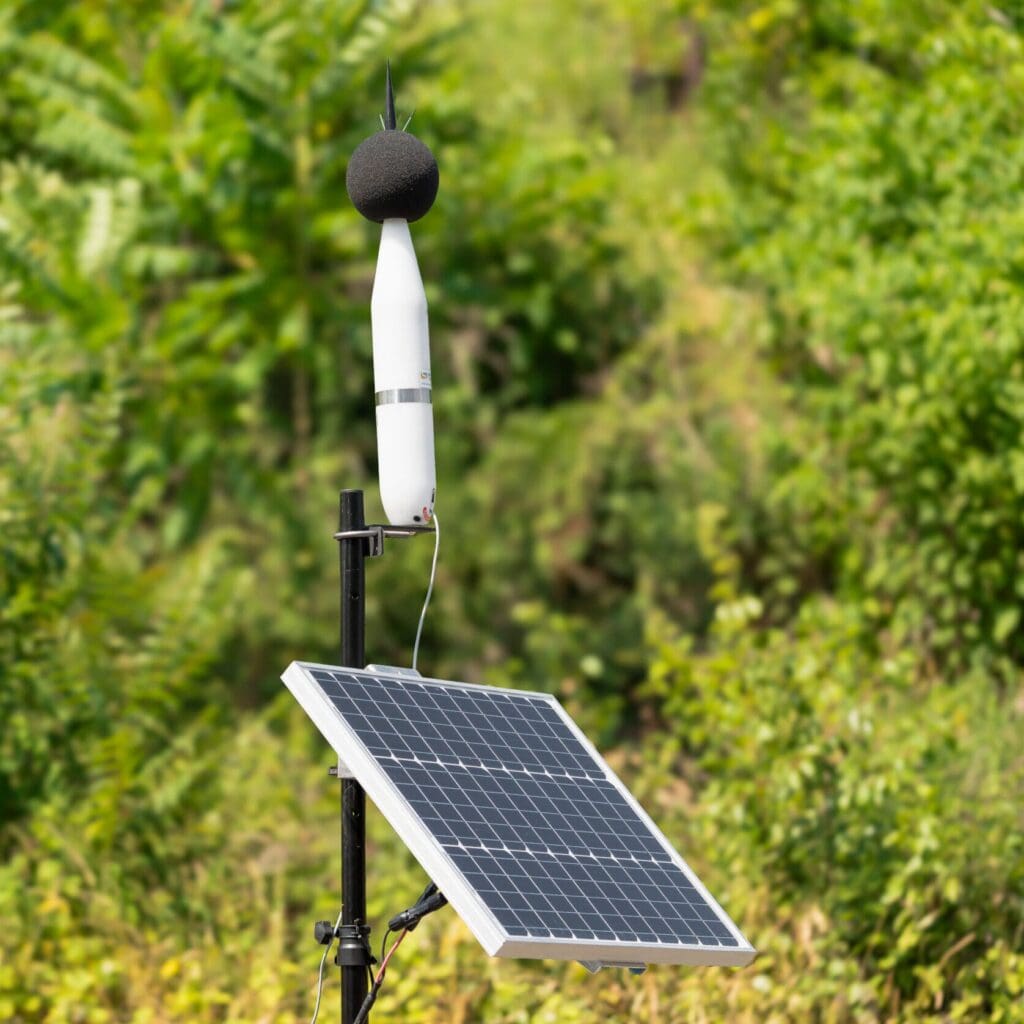
Svantek SV 307A Class 1 Noise Monitoring Station
Deploy once. Monitor for months.
Permanent Class 1 noise monitoring built for continuous outdoor deployment, with a patented dual-microphone system check that verifies the measurement path remotely.
Available to rent or buy from Specto's US inventory.
- Class 1 accuracy to IEC 61672-1:2013, with optional 1/1 and 1/3 octave analysis to IEC 61260-1:2014
- Noise statistics computed on the station — Ln (L1–L99), Lden, LEPd, two rolling Leq, and a complete histogram in meter mode
- Lifetime Svantek warranty on the patented MEMS microphone; three-year warranty on the instrument
- IP 54 housing rated from −20 °C to 60 °C, with 32 GB microSD storage upgradeable to 128 GB
- Patented dual-microphone system check, plus a built-in sound source producing approximately 100 dBA at 1 kHz for manual or automated verification
- Built-in 4G modem for SMS and email alarms, with results and configuration available through SvanNET
- Battery operation up to 6 days with the modem off and up to 5 days with it on, plus solar, AC, and external DC (10.5–24 V) power options
- Optional triggered audio recording and live audio streaming to support noise source identification
Our Methodology — How We Work With You
01
Discovery
We start by understanding the project, not by selling equipment. That means scope, timeline, and location; monitoring requirements and regulations; site constraints like power, connectivity, and access; and who needs the reports.
02
System Design and Preparation
We bring together the hardware, sensors, power and connectivity strategy, software setup, alerts, reporting, mounting, and accessories — then configure and prepare the system so it arrives ready for the field.
03
Delivery, Onboarding and Support
We support your team through deployment guidance, practical training, troubleshooting, reporting and alert support, and calibration and service coordination for the life of the project.
Washington Noise Monitoring — Common Questions
Washington is unusual in setting noise limits statewide. Under WAC 173-60, the Department of Ecology assigns each property an EDNA zone and sets maximum dBA levels at the receiving property, and those limits drop by 10 dBA at night for residential areas. Temporary construction is largely exempt from the daytime limits but not from the nighttime limit near homes, and local ordinances such as Seattle's add construction hours and a variance process. Because the rule is a mix of state and local codes, confirm the requirements for your site with the authority having jurisdiction.
Washington's rules are written around a sound level meter meeting an ANSI specification and a decibel limit at the receiving property. The SV 307A meets IEC 61672-1 Class 1 — the international counterpart to ANSI Type 1, the most accurate class — so it is built to that level of precision, though final acceptance of any instrument rests with the authority having jurisdiction. It records continuously and documents the level at the receiving property against the applicable EDNA limit, its 4G modem sends SMS and email alerts as levels approach a threshold, and data stays available through SvanNET for agency review.
Long deployments are where remote verification matters most. The SV 307A pairs a patented dual-microphone system check with a built-in sound source for manual or automated verification, so you can confirm the measurement path without a site visit, and data stays available through SvanNET for the life of the project. A built-in 4G modem sends SMS and email alerts the moment a threshold is exceeded.
Request Quote
For Sales, Rentals, and Quotes, please get in touch with us by filling out the form below. Our knowledgeable staff is ready and eager to assist you!