
Noise Monitoring in
Hawaii
Class 1 sound data, measured to Hawaii's own standard.
Hawaii runs one of the most specific noise regimes in the country. The state Department of Health sets maximum permissible sound levels by zoning class, requires a permit for construction that will exceed 78 dBA, and calls for measurements taken by qualified people using calibrated instruments.
On islands where projects sit close to homes, resorts, and conservation land, the number you record has to hold up. Specto equips Hawaii contractors and consultants with Class 1 monitoring stations that record around the clock, send alerts when a threshold is exceeded, and report automatically — so your team answers questions with data instead of recollection.
Regulatory
The Rules That Apply to Hawaii Projects
Hawaii regulates noise through the state Department of Health under a detailed administrative rule, with county ordinances layered on top. Requirements come from several places at once:
- Community Noise Control (HAR 11-46) — maximum permissible sound levels apply at the property line by zoning class: 55 dBA day and 45 dBA night in Class A residential, 60/50 in Class B, and 70 in Class C industrial
- Construction noise permit — a Department of Health permit is required before construction or equipment noise exceeds the applicable maximum permissible level, with fees set for construction activities
- The 10 percent rule and impulsive noise — levels may not exceed the limit for more than ten percent of any twenty-minute period, and impulsive noise is capped ten dBA above the table using fast meter response
- dBC bass provision (HRS 342F-31.5) — nighttime bass sound in urban districts is measured on the dBC scale, with a lower limit near mixed-use and residential areas
- Certified measurement, county ordinances, and federal rules — Hawaii specifies measurement and certification procedures, counties such as Honolulu add their own construction rules, and FHWA 23 CFR 772, HDOT, and OSHA requirements apply on qualifying projects
Why Hawaii Teams Choose Specto
01
Ready to Deploy: US Inventory
Specto stocks Class 1 noise monitoring systems in the US for rent or purchase. Teams on Oahu, Maui, Hawaii Island, and Kauai can arrange monitoring without sourcing equipment from the mainland at the last minute.
02
Field-Ready: Configured Before Shipment
Each station arrives with alert thresholds, reporting schedules, and SvanNET remote access already set. Your crew installs and starts recording, instead of assembling a system on site.
03
Applied Expertise: Zoning Limits and dBC
Hawaii sets limits by zoning class and measures bass noise on the dBC scale. The SV 307A logs A-weighted and C-weighted levels at the same time, so one station covers both the daytime dBA limit and the nighttime dBC provision your site may face.
Who Uses Specto in Hawaii
We don’t replace consultants — we equip them. Common users include:
Environmental consultants
Acoustical and noise-permit consultants
Geotechnical engineers and general contractors
HDOT and federally funded transportation teams
Resort, rail, and public-works project teams
The Hawaii Construction Landscape
Construction is one of the brighter spots in Hawaii’s economy heading into 2026. On Oahu, the Skyline rail project moved into its City Center segment, with roughly three miles of elevated guideway and six stations under construction through Kalihi, Iwilei, Chinatown, and downtown Honolulu toward a 2031 opening. The teardown and redevelopment of Aloha Stadium is advancing, and a long pipeline of affordable and workforce housing is underway across the islands.
The Skyline corridor alone runs for years through busy Dillingham and Nimitz, beside homes and businesses the whole way. Continuous monitoring gives Hawaii teams the data they need to document conditions, respond to concerns quickly, and keep work moving.
Hawaii Firms Working in
Noise-Sensitive Environments
Hawaii’s engineering, environmental, and construction community handles the projects where noise monitoring matters most. Firms active across the islands include:
D.L. Adams Associates
Kailua
Acoustical consulting firm operating in Hawaii since 1979, specializing in environmental noise assessment, noise monitoring, transportation and traffic noise, and mechanical noise and vibration control.
Geolabs, Inc.
Honolulu
Employee-owned, full-service geotechnical engineering firm established in 1975, with drilling equipment on every major island and work for the City and County of Honolulu, the State, and HART.
Fewell Geotechnical Engineering, Ltd.
Pearl City
Hawaii geotechnical engineering firm providing subsurface investigation, foundation design, and construction-phase geotechnical services across Oahu and the neighbor islands.
Hirata & Associates, Inc.
Aiea
Hawaii-based civil and geotechnical engineering firm serving public and private development, infrastructure, and construction projects across the islands.
Hart Crowser
Honolulu
Geotechnical and environmental consultancy with a longstanding Honolulu office, covering subsurface investigation, environmental assessment, and construction support on Pacific projects.
JPB Engineering, Inc.
Kaneohe
Hawaii civil and geotechnical engineering firm providing site investigation, design, and construction services for island development and public works.
Working on a Hawaii project that needs noise monitoring? Specto supports consultants and contractors as a technology partner.
Recommended System for Hawaii Noise Monitoring
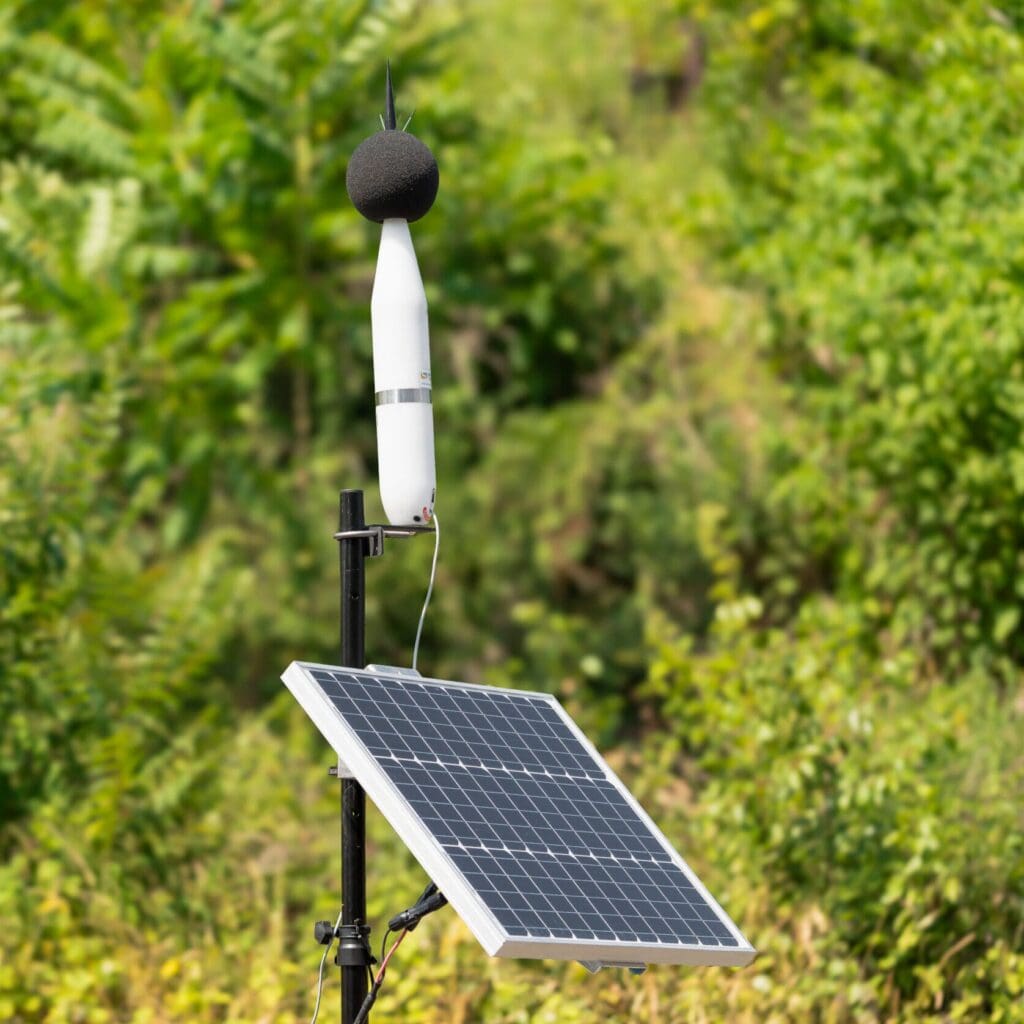
Svantek SV 307A Class 1 Noise Monitoring Station
Deploy once. Monitor for months.
Permanent Class 1 noise monitoring built for continuous outdoor deployment, with a patented dual-microphone system check that verifies the measurement path remotely.
Available to rent or buy from Specto's US inventory.
- Class 1 accuracy to IEC 61672-1:2013, with optional 1/1 and 1/3 octave analysis to IEC 61260-1:2014
- Noise statistics computed on the station — Ln (L1–L99), Lden, LEPd, two rolling Leq, and a complete histogram in meter mode
- Lifetime Svantek warranty on the patented MEMS microphone; three-year warranty on the instrument
- IP 54 housing rated from −20 °C to 60 °C, with 32 GB microSD storage upgradeable to 128 GB
- Patented dual-microphone system check, plus a built-in sound source producing approximately 100 dBA at 1 kHz for manual or automated verification
- Built-in 4G modem for SMS and email alarms, with results and configuration available through SvanNET
- Battery operation up to 6 days with the modem off and up to 5 days with it on, plus solar, AC, and external DC (10.5–24 V) power options
- Optional triggered audio recording and live audio streaming to support noise source identification
Our Methodology — How We Work With You
01
Discovery
We start by understanding the project, not by selling equipment. That means scope, timeline, and location; monitoring requirements and regulations; site constraints like power, connectivity, and access; and who needs the reports.
02
System Design and Preparation
We bring together the hardware, sensors, power and connectivity strategy, software setup, alerts, reporting, mounting, and accessories — then configure and prepare the system so it arrives ready for the field.
03
Delivery, Onboarding and Support
We support your team through deployment guidance, practical training, troubleshooting, reporting and alert support, and calibration and service coordination for the life of the project.
Hawaii Noise Monitoring — Common Questions
Yes. Under HAR 11-46, a Department of Health noise permit is required before construction or related equipment exceeds the maximum permissible sound level for the zoning class, and the state's notification form applies to projects generating more than 78 dBA. Levels also may not exceed the limit for more than ten percent of any twenty-minute period. Confirm current permit requirements with the Department of Health before work begins.
HAR 11-46 sets maximum permissible sound levels at the property line by zoning class: 55 dBA daytime and 45 dBA nighttime in Class A residential, conservation, and preservation areas; 60/50 in Class B commercial and resort areas; and 70 dBA in Class C agricultural and industrial areas. Daytime runs 7:00 a.m. to 10:00 p.m. Local county rules can add further limits.
Yes. Hawaii's rules use the dBA scale for the zoning-class limits and the dBC scale for nighttime bass sound in urban districts. The SV 307A carries A, B, C, Z, and LF weighting filters and logs three independent profiles at once, so A-weighted and C-weighted results come from the same instrument over the same period.
Request Quote
For Sales, Rentals, and Quotes, please get in touch with us by filling out the form below. Our knowledgeable staff is ready and eager to assist you!