
Noise Monitoring in
Colorado
Class 1 sound data, measured against a limit the state actually sets.
Colorado is one of the few states that writes noise limits into statute. The Noise Abatement Act sets maximum permissible levels by zone and time of day, construction is held to the industrial-zone limits for the permitted period, and oil and gas operations answer to a separate rule that specifies how the measurement itself must be made.
That makes the number you record matter as much as the work you do. Specto equips Colorado contractors and consultants with Class 1 monitoring stations that record around the clock, send alerts when a threshold is exceeded, and report automatically — so your team answers questions with data instead of recollection.
Regulatory
The Rules That Apply to Colorado Projects
Unlike most states, Colorado sets noise limits in statute rather than leaving them entirely to local ordinance. Requirements come from several layers at once:
- Colorado Noise Abatement Act (C.R.S. § 25-12-103) — maximum permissible levels by zone, measured 25 feet or more beyond the property line, ranging from 55 dB(A) in residential zones during the day to 80 dB(A) in industrial zones
- Construction is held to the industrial-zone limits — 80 dB(A) between 7:00 a.m. and 7:00 p.m. and 75 dB(A) overnight, for the period allowed by the applicable construction permit
- Periodic, impulsive, or shrill noise is treated as 5 dB(A) higher than measured, which tightens the effective limit on impact equipment
- ECMC Rule 423 — oil and gas operations answer to both dB(A) and dB(C) limits, with readings taken 5 feet above ground level, using a windscreen, and only when wind is at or below 5 miles per hour
- Municipal ordinances, CDOT requirements, and FHWA 23 CFR 772 on federally funded projects, alongside OSHA construction noise exposure requirements (29 CFR 1926.52)
Why Colorado Teams Choose Specto
01
Ready to Deploy: US Inventory
Specto stocks Class 1 noise monitoring systems in the US for rent or purchase. Teams in Denver, Colorado Springs, Fort Collins, Grand Junction, and across the Western Slope can have monitoring on site in days — before a concern turns into a delay.
02
Field-Ready: Configured Before Shipment
Each station arrives with alert thresholds, reporting schedules, and SvanNET remote access already set. Your crew installs and starts recording, instead of assembling a system on site.
03
Applied Expertise: Statutory Limits and Dual Weighting
Colorado holds construction to a statutory limit and holds energy operations to dB(A) and dB(C) at once. Specto configures each station to log the weightings and thresholds your rule actually names, rather than a generic default.
Who Uses Specto in Colorado
We don’t replace consultants — we equip them. Common users include:
Environmental consultants
Geotechnical engineers and materials testing firms
Construction managers and general contractors
CDOT and federally funded transportation teams
Oil, gas, and mining operators
The Colorado Construction Landscape
CDOT’s I-70 Floyd Hill project passed the halfway mark in July 2026, transforming eight miles of the Mountain Corridor between Evergreen and eastern Idaho Springs. Work has moved from rock excavation into bridge and roadway construction, with rockblasting and rockscaling still running Monday through Thursday between 9:00 a.m. and 3:00 p.m. Across the Front Range, Denver metro growth, data center construction, and continued Weld County energy activity keep heavy equipment working close to homes.
Because Colorado’s limits sit in statute rather than in a case-by-case finding, a recorded number carries weight from the outset. Continuous monitoring gives Colorado teams the data they need to document conditions, respond to concerns quickly, and keep work moving.
Colorado Firms Working in
Noise-Sensitive Environments
Colorado’s engineering, environmental, and construction community handles the projects where noise monitoring matters most. Firms active across the state include:
Atkinson-Noland & Associates, Inc.
Boulder and Lafayette
Boulder-based structural engineering firm specializing in masonry, structural investigation, and nondestructive evaluation for building, historic, and infrastructure projects across Colorado and nationwide.
Bulson Surveying
Telluride
Southwest Colorado land-surveying firm providing boundary, topographic, and construction surveying for development and infrastructure projects across the region.
EIS Environmental
Bayfield
Colorado environmental consulting firm providing environmental assessment, permitting, and compliance services for energy, infrastructure, and development projects across the state.
Madigan and Co
Aspen
Aspen-area construction firm providing general contracting and construction services for residential, commercial, and institutional projects across western Colorado.
Kilduff Underground Engineering, Inc.
Denver
Denver-based underground and tunnel engineering firm providing tunnel, microtunnel, and trenchless design, support-of-excavation and geotechnical engineering, and construction management for infrastructure projects across Colorado and the West.
Hensel Phelps
Greeley
One of the largest general contractors and construction managers in the country, headquartered in Colorado, delivering commercial, aviation, healthcare, and government construction across the state and nationwide.
Working on a Colorado project that needs noise monitoring? Specto supports consultants and contractors as a technology partner.
Recommended System for Colorado Noise Monitoring
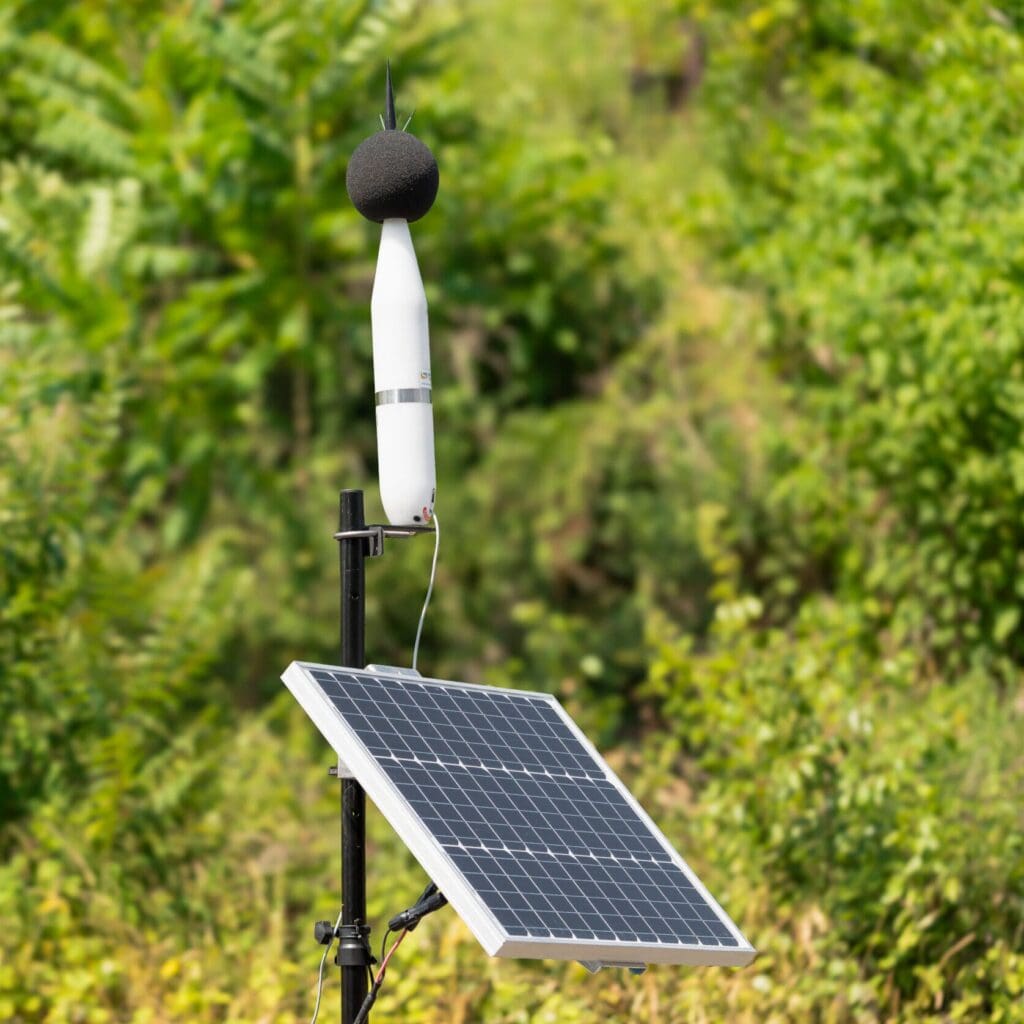
Svantek SV 307A Class 1 Noise Monitoring Station
Deploy once. Monitor for months.
Permanent Class 1 noise monitoring built for continuous outdoor deployment, with a patented dual-microphone system check that verifies the measurement path remotely.
Available to rent or buy from Specto's US inventory.
- Class 1 accuracy to IEC 61672-1:2013, with optional 1/1 and 1/3 octave analysis to IEC 61260-1:2014
- Noise statistics computed on the station — Ln (L1–L99), Lden, LEPd, two rolling Leq, and a complete histogram in meter mode
- Lifetime Svantek warranty on the patented MEMS microphone; three-year warranty on the instrument
- IP 54 housing rated from −20 °C to 60 °C, with 32 GB microSD storage upgradeable to 128 GB
- Patented dual-microphone system check, plus a built-in sound source producing approximately 100 dBA at 1 kHz for manual or automated verification
- Built-in 4G modem for SMS and email alarms, with results and configuration available through SvanNET
- Battery operation up to 6 days with the modem off and up to 5 days with it on, plus solar, AC, and external DC (10.5–24 V) power options
- Optional triggered audio recording and live audio streaming to support noise source identification
Our Methodology — How We Work With You
01
Discovery
We start by understanding the project, not by selling equipment. That means scope, timeline, and location; monitoring requirements and regulations; site constraints like power, connectivity, and access; and who needs the reports.
02
System Design and Preparation
We bring together the hardware, sensors, power and connectivity strategy, software setup, alerts, reporting, mounting, and accessories — then configure and prepare the system so it arrives ready for the field.
03
Delivery, Onboarding and Support
We support your team through deployment guidance, practical training, troubleshooting, reporting and alert support, and calibration and service coordination for the life of the project.
Colorado Noise Monitoring — Common Questions
Construction is held to the industrial-zone limits in the Colorado Noise Abatement Act for the period allowed by the construction permit — 80 dB(A) between 7:00 a.m. and 7:00 p.m. and 75 dB(A) overnight, measured 25 feet or more beyond the property line. Periodic, impulsive, or shrill noise is treated as 5 dB(A) higher than measured. Municipal ordinances can be stricter, so confirm the governing limit with the authority having jurisdiction before setting thresholds.
Yes. The SV 307A carries A, B, C, Z, and LF weighting filters and logs three independent profiles simultaneously, so A-weighted and C-weighted results come from the same instrument over the same period. That matters on Colorado energy sites, where ECMC Rule 423 sets limits in both.
Class 1 specifications under IEC 61672-1:2013 are referenced to standard conditions that include sea-level static pressure, and most Colorado sites sit well above that. The practical consequence falls on field calibration rather than the measurement itself, so the calibration approach is worth confirming for high-elevation deployments before equipment ships.
Request Quote
For Sales, Rentals, and Quotes, please get in touch with us by filling out the form below. Our knowledgeable staff is ready and eager to assist you!