
Noise Monitoring in
Connecticut
Class 1 sound data for work in close quarters.
Connecticut runs its major projects through some of the most densely settled corridors in the country. The New Haven Line rebuild, the Gold Star Memorial Bridge rehabilitation, and the long-planned reconfiguration of I-84 and I-91 in Hartford all put heavy construction within earshot of homes, transit riders, and businesses.
The state also regulates noise through a framework that reaches down to municipal ordinances, so the governing standard is rarely far away. Specto equips Connecticut contractors and consultants with Class 1 monitoring stations that record around the clock, send alerts when a threshold is exceeded, and report automatically — so your team answers questions with data instead of recollection.
Regulatory
The Rules That Apply to Connecticut Projects
Connecticut regulates noise through a statewide framework that authorizes and constrains local ordinances. Requirements come from several layers at once:
- Connecticut Noise Pollution Control Act (C.G.S. Chapter 442) — directs the state to maintain a noise control program and lets municipalities adopt their own ordinances, which take effect only once approved by the DEEP commissioner
- State noise regulations (RCSA § 22a-69) — classify land into noise zones and set allowable levels at the boundary, with separate provisions for impulse noise and prominent discrete tones
- Construction daytime exemption — construction noise is generally exempt during daytime hours under the state regulations, which shifts the practical exposure to early-morning, evening, and weekend work
- Municipal ordinances — many towns set their own decibel limits and permitted hours, and a town may adopt limits stricter than the state's with commissioner approval
- CONN-OSHA worker noise exposure standards, which adopt the federal construction rules by reference, alongside FHWA 23 CFR 772 and CTDOT requirements on federally funded projects
Why Connecticut Teams Choose Specto
01
Ready to Deploy: US Inventory
Specto stocks Class 1 noise monitoring systems in the US for rent or purchase. Teams in Hartford, New Haven, Stamford, Bridgeport, and New London can have monitoring on site in days — before a concern turns into a delay.
02
Field-Ready: Configured Before Shipment
Each station arrives with alert thresholds, reporting schedules, and SvanNET remote access already set. Your crew installs and starts recording, instead of assembling a system on site.
03
Applied Expertise: Off-Hours and Occupied Sites
When Connecticut’s daytime construction exemption pushes work into evenings and weekends, the noise that matters happens when neighbors are home. Specto configures alert thresholds and reporting for the hours your project actually generates complaints.
Who Uses Specto in Connecticut
We don’t replace consultants — we equip them. Common users include:
Environmental consultants
Geotechnical engineers and vibration consultants
Construction managers and general contractors
CTDOT and federally funded transportation teams
Rail, bridge, and marine project teams
The Connecticut Construction Landscape
In July 2026 CTDOT broke ground in Stratford on TIME-1, a three-phase, $1.6 billion rebuild of the New Haven Line — the busiest commuter rail line in the country. On I-95, the Gold Star Memorial Bridge rehabilitation shifted into a new traffic configuration in May 2026 and runs through 2030, carrying roughly 60,000 vehicles a day across the Thames River during construction. Hartford’s plan to reconfigure the I-84 and I-91 interchange, including a new Connecticut River crossing, continues to advance, and Electric Boat’s expansion in Groton keeps industrial construction active in the southeast.
Almost all of it happens beside occupied buildings and active transit. Continuous monitoring gives Connecticut teams the data they need to document conditions, respond to concerns quickly, and keep work moving.
Connecticut Firms Working in
Noise-Sensitive Environments
Connecticut’s engineering, environmental, and construction community handles the projects where noise monitoring matters most. Firms active across the state include:
TRC Environmental Corporation
Windsor
National environmental and engineering consulting firm headquartered in Connecticut, providing environmental, permitting, and construction-support services for infrastructure and development projects across the state.
GZA GeoEnvironmental, Inc.
Glastonbury and Trumbull
Geotechnical, environmental, and water engineering firm with Connecticut offices, providing subsurface investigation, environmental consulting, and construction-support services across the state and New England.
Freeman Companies, LLC
Hartford
Hartford-based civil engineering and construction-management firm providing site/civil design, transportation, and infrastructure engineering for public and private projects across Connecticut.
Conlon Engineering, LLC
Brookfield
Connecticut civil engineering firm providing site/civil design, land development, and municipal engineering for commercial and infrastructure projects across the state.
Brian Ages Project Services
New Canaan
Connecticut construction project-management and owner’s-representation firm providing preconstruction, project management, and construction oversight for commercial and institutional projects across the region.
Special Testing Laboratories, Inc.
Bethel
Connecticut construction materials testing and special-inspection firm providing concrete, soils, and structural testing and inspection for building and infrastructure projects across the state.
Working on a Connecticut project that needs noise monitoring? Specto supports consultants and contractors as a technology partner.
Recommended System for Connecticut Noise Monitoring
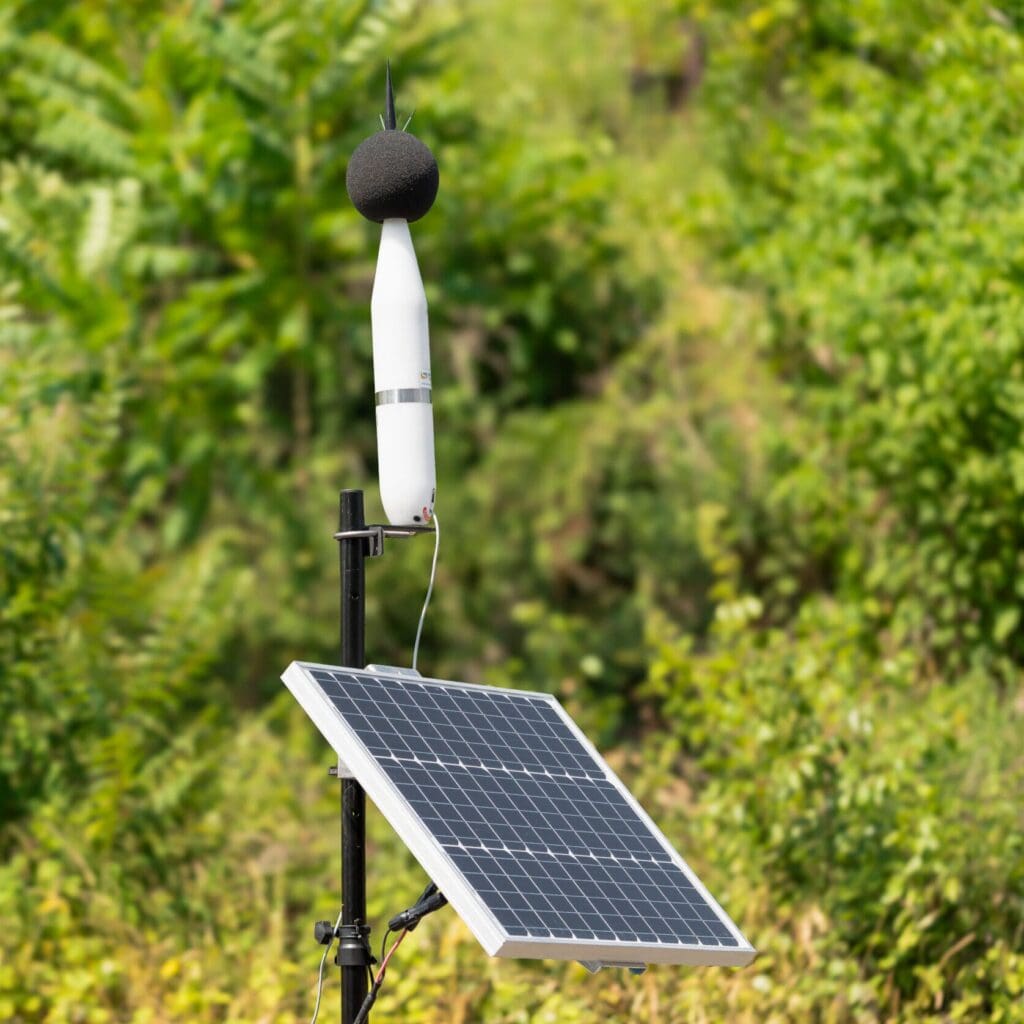
Svantek SV 307A Class 1 Noise Monitoring Station
Deploy once. Monitor for months.
Permanent Class 1 noise monitoring built for continuous outdoor deployment, with a patented dual-microphone system check that verifies the measurement path remotely.
Available to rent or buy from Specto's US inventory.
- Class 1 accuracy to IEC 61672-1:2013, with optional 1/1 and 1/3 octave analysis to IEC 61260-1:2014
- Noise statistics computed on the station — Ln (L1–L99), Lden, LEPd, two rolling Leq, and a complete histogram in meter mode
- Lifetime Svantek warranty on the patented MEMS microphone; three-year warranty on the instrument
- IP 54 housing rated from −20 °C to 60 °C, with 32 GB microSD storage upgradeable to 128 GB
- Patented dual-microphone system check, plus a built-in sound source producing approximately 100 dBA at 1 kHz for manual or automated verification
- Built-in 4G modem for SMS and email alarms, with results and configuration available through SvanNET
- Battery operation up to 6 days with the modem off and up to 5 days with it on, plus solar, AC, and external DC (10.5–24 V) power options
- Optional triggered audio recording and live audio streaming to support noise source identification
Our Methodology — How We Work With You
01
Discovery
We start by understanding the project, not by selling equipment. That means scope, timeline, and location; monitoring requirements and regulations; site constraints like power, connectivity, and access; and who needs the reports.
02
System Design and Preparation
We bring together the hardware, sensors, power and connectivity strategy, software setup, alerts, reporting, mounting, and accessories — then configure and prepare the system so it arrives ready for the field.
03
Delivery, Onboarding and Support
We support your team through deployment guidance, practical training, troubleshooting, reporting and alert support, and calibration and service coordination for the life of the project.
Connecticut Noise Monitoring — Common Questions
Yes, though the state regulations generally exempt construction noise during daytime hours. The practical limits come from the applicable municipal ordinance, which sets decibel levels and permitted hours and takes effect only once approved by the state DEEP commissioner. A town may set limits stricter than the state's. Confirm the governing standard with the authority having jurisdiction before setting thresholds.
Often, yes. The state authorizes municipalities to adopt noise ordinances, so decibel limits and quiet hours can differ from one town to the next, and some are stricter than the state framework. Because Specto configures each station before shipment, thresholds are set to the specific town's limits rather than a generic default.
No. Airborne noise and groundborne vibration are separate measurements calling for different instruments. The SV 307A covers the noise side to Class 1 accuracy. Specto also supplies vibration monitoring systems, and on rail, bridge, and demolition work the two are frequently deployed together.
Request Quote
For Sales, Rentals, and Quotes, please get in touch with us by filling out the form below. Our knowledgeable staff is ready and eager to assist you!