Ozone (O₃) is one of the six criteria air pollutants identified by the U.S. EPA and is extensively monitored worldwide by regulatory agencies.
In the stratosphere, ozone is formed through the reaction of oxygen (O₂) with UV light, where it plays a critical role in absorbing harmful ultraviolet radiation and protecting life on Earth.
At ground level, however, ozone is produced through complex photochemical reactions involving UV light, nitrogen oxides (NOₓ), and volatile organic compounds (VOCs) emitted from human activities such as transportation and industrial processes. Unlike stratospheric ozone, ground-level ozone is harmful to both human health and vegetation, making its monitoring essential.
Ground-level ozone forms through sunlight-driven reactions involving nitrogen oxides and volatile organic compounds. The Aeroqual O₃ module measures ambient ozone concentrations, helping teams assess daily patterns and changing outdoor air quality.
Product Features
Specification
Details
Measurement technology
Gas-sensitive semiconductor with zero/measurement cycling
Measurement range
0-500 ppb
Display resolution
0.1 ppb
Lower detection limit
<1 ppb
Precision
2% of reading or 2 ppb
Noise: Zero (ppb); Span (% of reading)
<1; 1%
Linearity (% of FS)
1%
24 hr Drift: Zero (ppb); Span (% of FS)
1; 0.2%
Monitor platforms
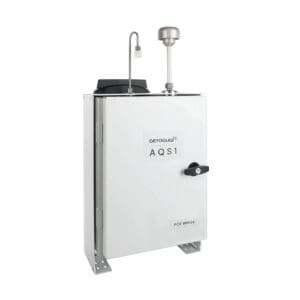
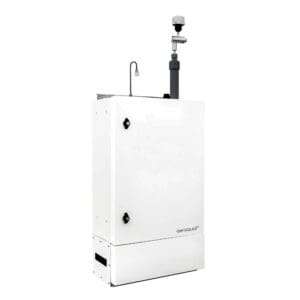
AQS 1 and AQM 65
The module compares zero and sample measurements to calculate ambient ozone concentrations.
Performance & Field Data
During an April 2022 co-location in Riverside, California, an AQM 65 ozone module achieved R² = 0.99 and a mean absolute error of 2.1 ppb against the regulatory station’s reference dataset.
Results shown are from the specific manufacturer-reported evaluation described. Performance depends on the monitoring configuration, calibration, site conditions and measurement objectives.
Typical Applications
Urban and regional air monitoring
Community air quality studies
Background monitoring
Investigations of photochemical pollution
Select the right module for your project
Tell Specto what you need to measure, the concentrations you expect and the monitor you plan to use. Our engineers and scientists can help you select the module, configuration and calibration approach for your project.